


-
News
- admin
- 07 Sep 2025
Workshop in Sentra Hotel with DKP and WCS
CTI-CFF Highlights Regional Collaboration for Marine Conservation and Sustainable Fisheries in North Sulawesi
Manado, Indonesia, 2–3 September — The Coral Triangle Initiative on Coral Reefs, Fisheries, and Food Security (CTI-CFF) actively participated in the forum “Provincial Insights and Lessons for Marine Conservation and Fisheries: A Forum Supporting CTI-CFF Regional Objectives”, jointly organized by the Provincial Marine and Fisheries Agencies (DKP) of North Sulawesi and the Wildlife Conservation Society (WCS). Held at Sentra Hotel in Manado, the event brought together government agencies, academia, civil society, and development partners to advance practical solutions for strengthening marine conservation and sustainable fisheries management.
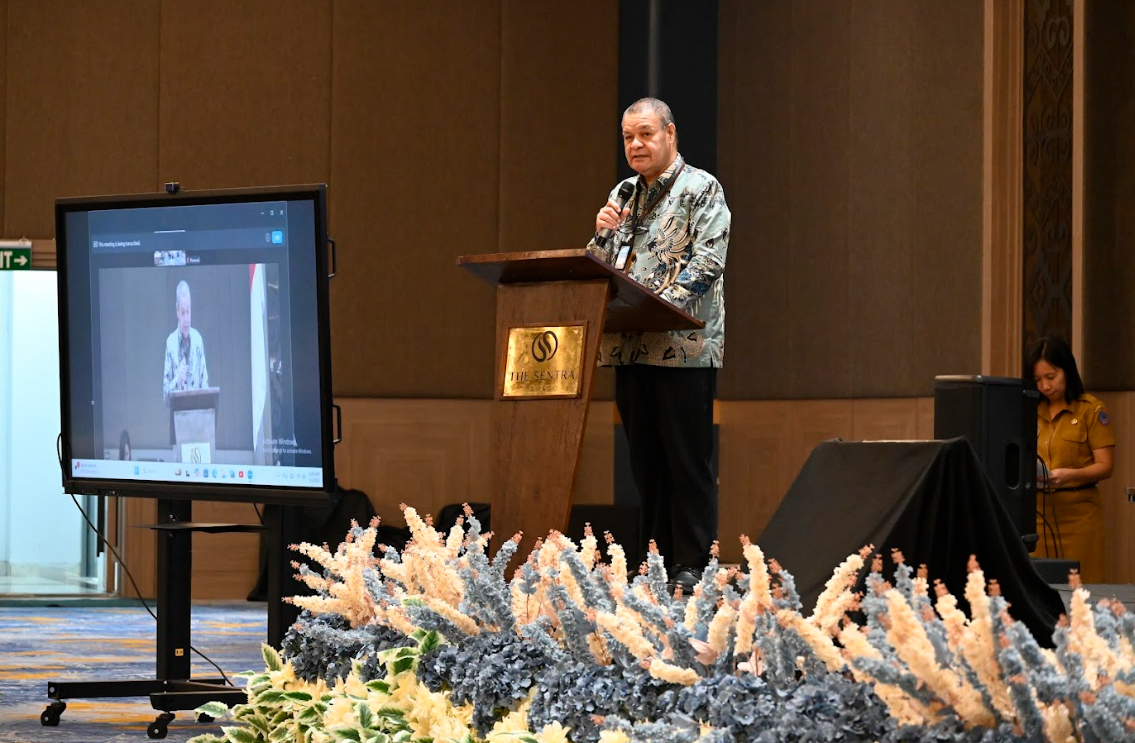
CTI-CFF Regional Secretariat Executive Director Dr. Frank Keith Griffin delivered the opening remarks, emphasizing the importance of local actions that connect to regional and global goals:
“The Coral Triangle is recognized as the global epicenter of marine biodiversity, and North Sulawesi holds a special place in this region. Its coastal and marine ecosystems sustain livelihoods, ensure food security, and support eco-tourism. The work we do here at the local level is directly connected to Indonesia’s National Plan of Action as well as to the broader regional vision under CTI-CFF: safeguarding marine resources, strengthening fisheries governance, and building resilience for future generations.”
Workshop in Sentra Hotel with DKP and WCS
CTI-CFF Highlights Regional Collaboration for Marine Conservation and Sustainable Fisheries in North Sulawesi
Manado, Indonesia, 2–3 September — The Coral Triangle Initiative on Coral Reefs, Fisheries, and Food Security (CTI-CFF) actively participated in the forum “Provincial Insights and Lessons for Marine Conservation and Fisheries: A Forum Supporting CTI-CFF Regional Objectives”, jointly organized by the Provincial Marine and Fisheries Agencies (DKP) of North Sulawesi and the Wildlife Conservation Society (WCS). Held at Sentra Hotel in Manado, the event brought together government agencies, academia, civil society, and development partners to advance practical solutions for strengthening marine conservation and sustainable fisheries management.
CTI-CFF Regional Secretariat Executive Director Dr. Frank Keith Griffin delivered the opening remarks, emphasizing the importance of local actions that connect to regional and global goals:
“The Coral Triangle is recognized as the global epicenter of marine biodiversity, and North Sulawesi holds a special place in this region. Its coastal and marine ecosystems sustain livelihoods, ensure food security, and support eco-tourism. The work we do here at the local level is directly connected to Indonesia’s National Plan of Action as well as to the broader regional vision under CTI-CFF: safeguarding marine resources, strengthening fisheries governance, and building resilience for future generations.”
Forum Strengthens Collaboration and Shared Learning
The forum supported Indonesia’s commitment under its National Plan of Action (NPoA) and contributed to the regional targets of the CTI-CFF Regional Plan of Action (RPoA) 2.0. It served as a platform to exchange experiences, lessons learned, and data on marine protected areas (MPAs), small-scale fisheries, species protection, and integrated terrestrial-marine conservation. The agenda also addressed urgent issues such as sustainable financing for MPAs and combating illegal wildlife trade in the Coral Triangle.
Throughout the two-day workshop, CTI-CFF shared critical insights into regional strategies and mechanisms to enhance marine resource management. On the first day, Mr. Christovel Rotinsulu, Deputy Executive Director for Program Services, presented the CTI-CFF Regional Plan of Action (RPoA) 2.0, outlining regional targets and achievements. His presentation highlighted how the RPoA 2.0 serves as a roadmap for collaborative action in the region.
Continuing into the second day, he focused on Marine Protected Area (MPA) management effectiveness, emphasizing the role of the IUCN Green List, the Coral Triangle Marine Protected Area System (CTMPAS), and the CT Atlas as vital tools for improving conservation outcomes. He underscored how these mechanisms help measure MPA management effectiveness, share data, and promote best practices across the region.
Also on the second day, Mr. Hanung Cahyono, Deputy Executive Director for Corporate Services, introduced the Coral Triangle Conservation Fund (CTCF). He explained how the fund is designed as a sustainable financing mechanism to support long-term conservation and enhance community resilience. By mobilizing resources and strengthening local institutions, the CTCF aims to secure the future of marine biodiversity while ensuring that benefits extend to coastal communities who depend on these resources for their livelihoods.
Beyond presentations, the workshop created opportunities for provincial fisheries agencies to share innovative approaches, including the use of Regional Public Service Agencies (BLUDs) to manage MPAs sustainably, as well as co-management practices led by communities such as Panglima Laot in Aceh. Discussions also highlighted the importance of integrating land and sea conservation through Ridge to Reef (R2R) approaches and strengthening enforcement against illegal wildlife trade.
By engaging provincial stakeholders and aligning local initiatives with the CTI-CFF framework, the forum reinforced the importance of collaborative action in achieving shared conservation and fisheries management goals.
CTI-CFF remains committed to fostering cooperation among member countries and partners to promote a sustainable and resilient Coral Triangle region.